
Designing for safeguarding: How the DfE ‘sight and hearing’ rule impacts school washroom refurbishments
When multi-academy trusts (MATs) and schools plan a washroom refurbishment, the conversation usually revolves around durability, hygiene, and water-saving technology. However, a major shift in safeguarding focus is putting compliance at the very top of the agenda.
Forward-thinking MATs are now explicitly referencing Department for Education (DfE) statutory frameworks to ensure new washroom layouts actively support staff supervision. Specifically, the spotlight is on Clause 3.43 of the Early Years Foundation Stage (EYFS) statutory framework, which states: "Children must usually be within sight and hearing of staff and always within sight or hearing." If you are upgrading early years or primary school facilities, understanding how to translate this strict safeguarding clause into physical washroom architecture is essential.
Clearing up the "sight and sound" nuance
There is often confusion around whether staff need to both see and hear children, or just one of the two. The DfE guidelines clear this up by breaking supervision into two distinct levels:
The Standard Rule (Sight AND Hearing): Under normal circumstances, children should ideally be within both sight and hearing of staff. This applies heavily to general classroom activities and high-risk times, such as when children are eating (where visual supervision is mandatory to prevent silent choking).
The Practical Exception (Sight OR Hearing): The DfE recognises that certain layouts make simultaneous sight and sound impossible. In these scenarios—such as a child using a toilet cubicle—the strict fallback rule is that they must always be within either sight or hearing. Complete isolation is a compliance failure.
Translating clauses into washroom design (Clause 3.43)
You cannot simply stick to traditional, closed-off toilet block designs if you want to meet modern mat compliance standards. To satisfy the "sight or hearing" mandate without compromising a child’s right to basic privacy, school washrooms require intelligent layout planning. At Focus Washrooms, we specialise in designing and installing washrooms that meet these requirements.
Here is how clever design bridges the gap:
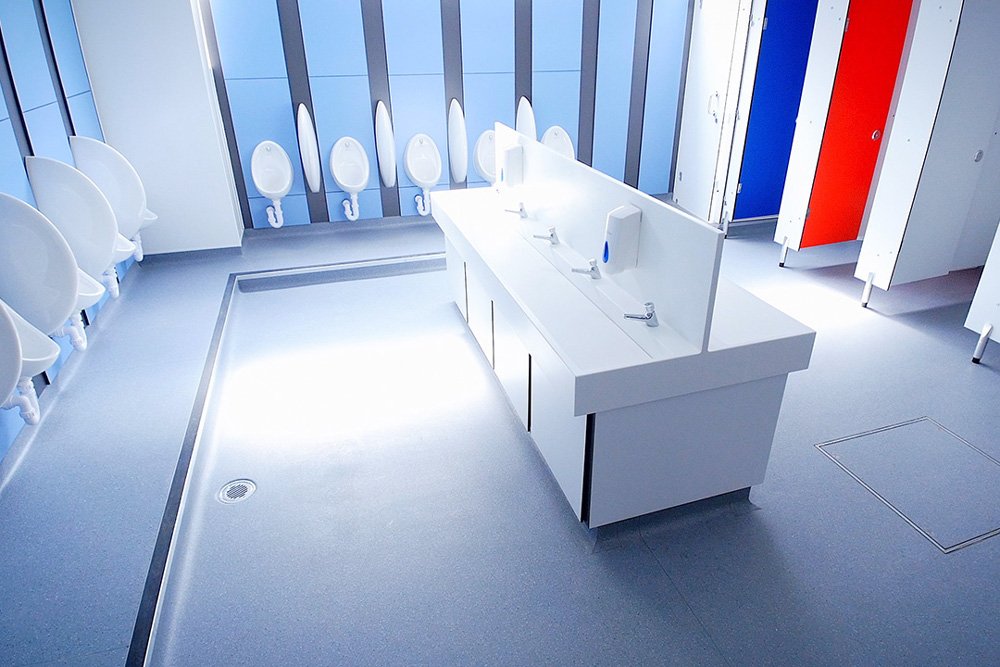
Open-plan handwashing areas: Eliminating main entrance doors and creating open-plan handwashing zones that face directly into the corridor or classroom allows passing staff to easily maintain acoustic and peripheral visual supervision. We can incorporate stylish and practical vanity units that encourage good hygiene, while also allowing for clear sightlines.
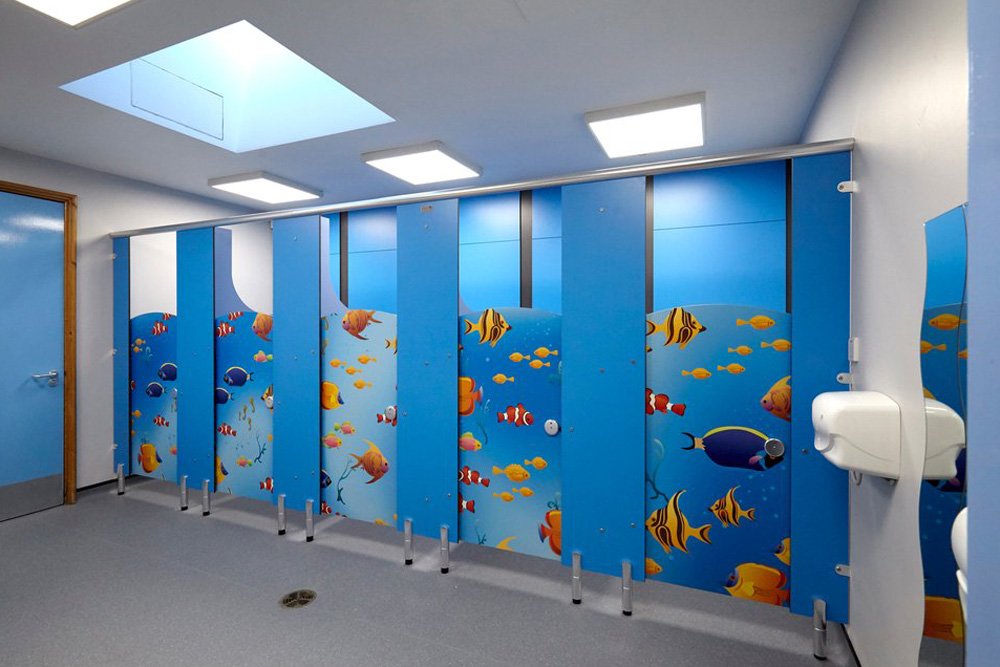
Low-height cubicle partitioning: For nursery and early years settings, using lowered cubicle doors and partitions allows supervising adults to monitor the space visually from the chest up, ensuring safety while respecting the child’s privacy. We have extensive experience with cubicle systems and can advise on the best solutions for your specific needs, ensuring compliance and comfort.
Acoustic consideration: Ensuring washrooms are integrated into the flow of the building rather than tucked away down long, isolated corridors ensures that staff are always within natural hearing distance. We can advise on the best placement of washrooms to ensure the safety and wellbeing of pupils.
The Privacy vs. Safeguarding Balance (Clause 3.86)
While supervision is vital, it cannot come at the expense of a child's right to basic dignity. Clause 3.86 (Toilets and intimate hygiene) addresses this balancing act head-on, mandating that providers must ensure:
There is an adequate number of toilets and hand basins available (usually with separate facilities for adults).
There are suitable hygienic changing facilities for children in nappies.
Children’s privacy is considered and balanced with safeguarding and support needs when changing nappies and toileting.
There is an adequate supply of clean bedding, towels, and spare clothes.
Why compliance matters for your next refurbishment
Ofsted and the DfE are increasingly strict regarding environment-based safeguarding risk assessments. If a school commissions a washroom refurbishment that creates blind spots or entirely acoustic-proof zones for young children, it could lead to a compliance failure. Ensuring your washroom design adheres to the latest guidelines is paramount.
At Focus Washrooms, we understand the specific needs of educational establishments. Our in-house design team works closely with you to create washroom spaces that are not only vibrant and robust but fully compliant with the latest dfe frameworks. We understand the importance of safeguarding and have dbs-checked operatives who are experienced in working within school environments. We also offer full project management, including phased programmes to minimise disruption during term time or school holidays. With over 25 years of experience, we have the expertise to deliver a project that meets your exact requirements.
Planning a washroom refurbishment?
Whether upgrading a single facility or delivering a larger programme across multiple sites, we provide structured planning, dependable delivery and long-term value.
Submit your details today and we’ll get in touch with you to discuss.
Or, call our team on 01707 952 700