
How much water does a washroom really use? A facilities manager's guide
When considering water consumption in commercial buildings, washrooms are often overlooked. Yet, every flush, tap turn, and urinal use contributes significantly to a building's overall water footprint. In busy commercial settings, these daily uses can quickly accumulate, amounting to thousands, or even millions, of litres annually.
With increasing pressure on UK water resources, understanding commercial washroom water consumption is paramount for facilities managers and property owners. This isn't just about environmental responsibility; it's about operational efficiency and cost management.
Why water efficiency in commercial washrooms is critical
England's water resources are under strain. Government targets aim to reduce public water use by 20% by 2038. Mandatory water-efficiency labelling for products like toilets and taps is also expected soon. Businesses play a vital role in this national effort, and washrooms offer one of the most accessible areas for significant water reduction opportunities.
Deconstructing commercial washroom water usage
Pinpointing exact water consumption is complex, influenced by factors such as:
Number of users and occupancy patterns
Number and type of fixtures
Operating hours and frequency of use
Flush volumes and tap flow rates
Presence of leaks
Type of control systems
A small office washroom will have a different consumption profile than one in a high-footfall venue. Usage can vary by orders of magnitude.
Toilets: the primary water consumers
Toilet flushing typically accounts for the largest proportion of washroom water usage. For example, 500 daily users flushing once a day, using 6 litres per flush, amounts to 750,000 litres annually. Switching to a 4.5-litre flush could save around 187,500 litres annually, demonstrating the impact of even minor improvements.
Urinals: opportunities for optimisation
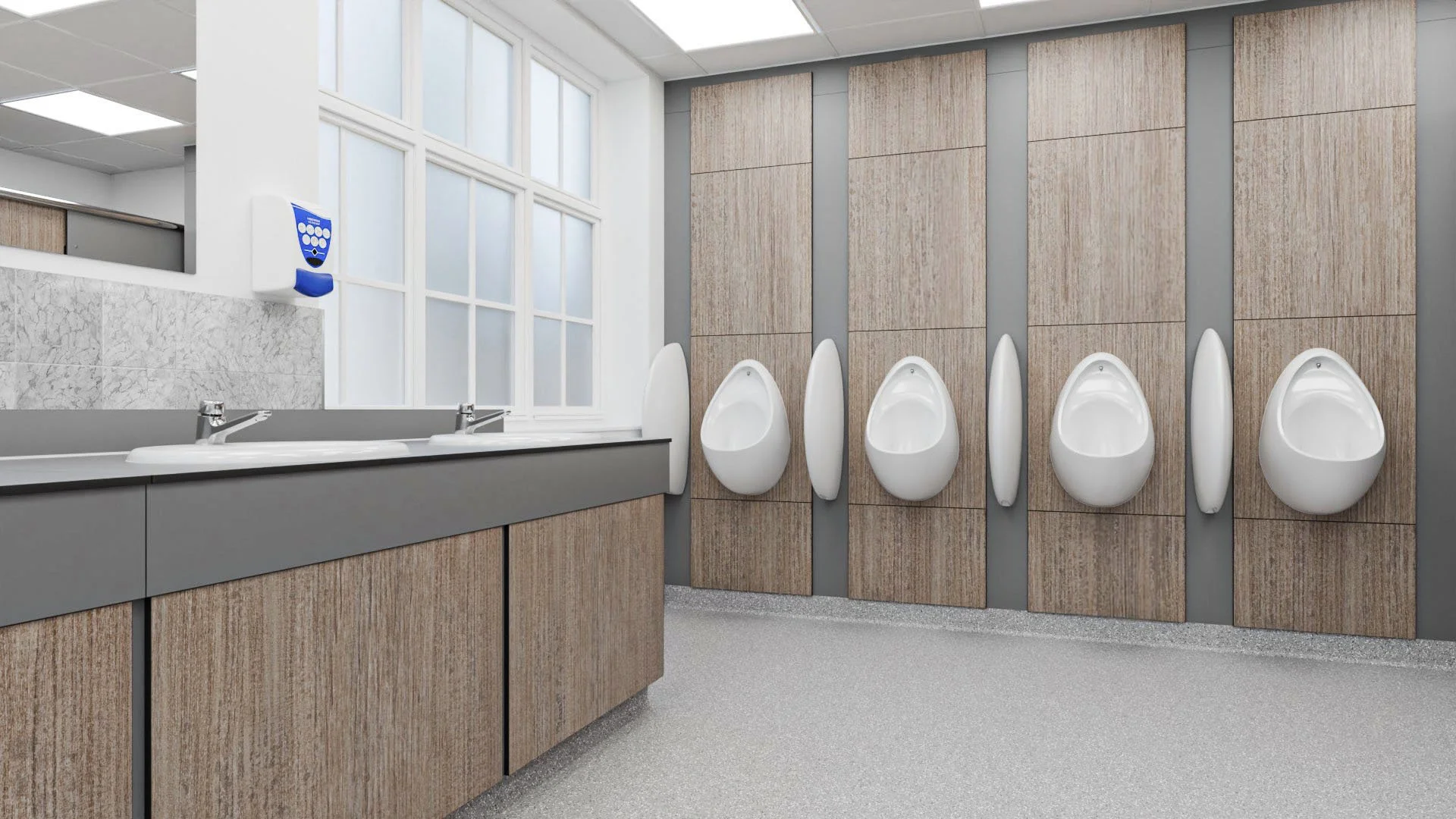
Urinals can also be significant water users. Traditional timed flushing systems can waste water. Demand-controlled systems respond to actual usage, offering greater efficiency. Waterless urinals may also be an option. The best solution balances water efficiency with hygiene, maintenance, and user demand.
Taps: a frequently overlooked contributor
While less prominent than toilets, taps contribute significantly. 500 daily users washing hands for 15 seconds with a 6 litres per minute tap flow rate can use roughly 187,500 litres annually. Reducing flow to 4 litres per minute could save approximately 62,500 litres per year. Sensor taps enhance efficiency but require correct specification.
The hidden cost of leaks
Leaks are a critical source of water waste. A continuously running cistern or dripping tap can waste substantial amounts. Regular inspection and proactive maintenance are as crucial as specifying efficient products.
Refurbishment: a holistic approach to water efficiency
While replacing individual fittings offers incremental improvements, a full washroom refurbishment provides a far greater opportunity to optimise water usage. At Focus Washrooms, we approach refurbishment holistically, reviewing the entire system:
Toilets: Optimising flush volumes and considering dual-flush systems.
Urinals: Implementing demand-controlled flushing or exploring waterless options.
Taps: Specifying appropriate flow rates and reliable sensor operation.
Plumbing: Ensuring leak prevention and considering water monitoring systems.
Our aim is to create a washroom that operates efficiently throughout its lifespan, maintaining performance, hygiene, and reliability. Reduced consumption directly translates to lower operating costs, especially in high-footfall venues.
The right question for intelligent design
The most effective approach to washroom design is asking: "How can we use the minimum amount of water necessary while maintaining excellent performance, hygiene, and reliability?"
Understanding your current water usage is key before a refurbishment. Assessing daily user numbers, operating hours, fixture counts, and existing specifications establishes a valuable baseline for informed decisions and measurable improvements.
Planning a washroom refurbishment?
Whether upgrading a single facility or delivering a larger programme across multiple sites, we provide structured planning, dependable delivery and long-term value.
Submit your details today and we’ll get in touch with you to discuss.
Or, call our team on 01707 952 700