
What does the 2026 drought mean for your washrooms?

With a significant portion of England facing drought conditions, water security is a national issue. For facilities managers and commercial property owners, reducing unnecessary water consumption is paramount. Washrooms, with their daily use of toilets, taps, and urinals, represent a prime opportunity for improvement. A washroom refurbishment can do more than just refresh its appearance; it's a chance to enhance water efficiency, boost reliability, and lower long-term operating costs.
Why water efficiency matters now
The UK's water situation is no longer a distant prospect. England is experiencing considerable pressure on its water resources. Government targets aim for a 20% reduction in public water consumption by 2038, with an interim goal of 9% by March 2027. Furthermore, a mandatory water-efficiency labelling scheme for products like toilets and taps is expected in 2026. This makes water efficiency a crucial factor when specifying products and planning refurbishments.
For commercial buildings, the focus must extend beyond simply selecting low-flow taps. Your existing washroom may be wasting more water than you realise.
Hidden water waste in your current washroom
Inefficiency often lies within existing equipment. A leaking toilet valve, a poorly set flush, or a continuously running urinal can waste substantial water unnoticed. Reports highlight that UK commercial properties can lose up to 30% of their water through hidden leaks. Refurbishment offers a chance to address these issues, looking beyond surface-level finishes.
Replacing old sanitaryware and fittings can resolve:
Outdated flushing systems
Leaking or unreliable valves
Excessive flush volumes
Inefficient taps
Continuously flushing urinals
Difficult-to-maintain plumbing
Hidden leaks
Poor access for maintenance
The result is a washroom that's not only modern but also more efficient and easier to manage.

Toilets: a key area for water savings
Toilets are a significant focus for water efficiency during refurbishment. Modern dual-flush systems offer variable flush volumes, while sensor-controlled options can reduce unnecessary flushing in certain environments. The crucial point is to specify based on the building's specific usage. A high-traffic facility has different needs to a small office. The goal is a balance of water consumption, flushing performance, reliability, hygiene, and maintenance – not just the lowest possible flush volume.
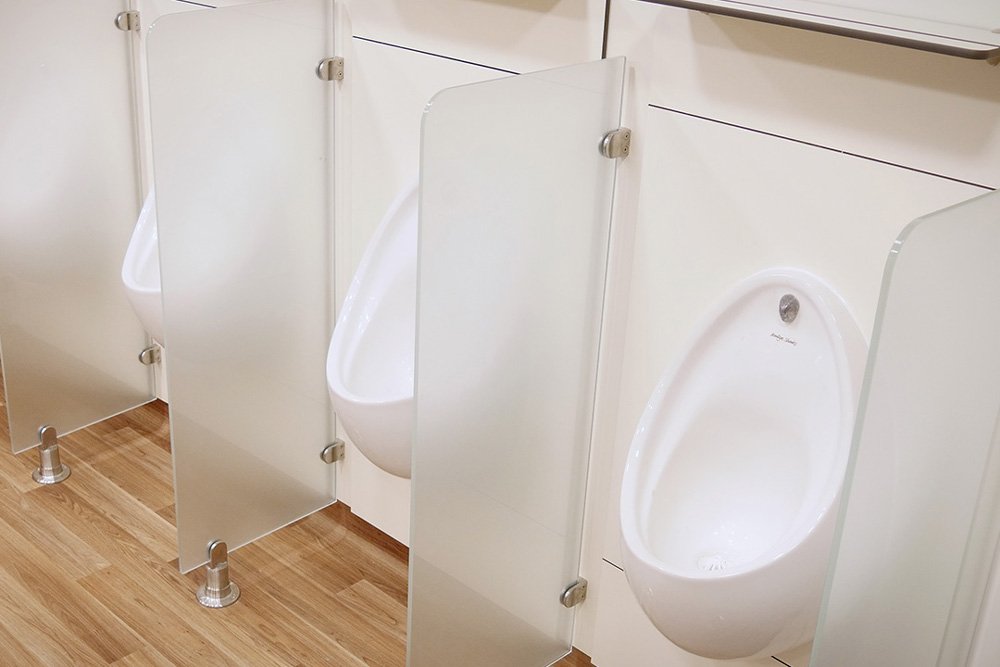
Urinals: another major source of potential waste
Urinals, especially in busy buildings, can be major water wasters. Traditional timed flushing systems operate regardless of actual use. Modern controls respond intelligently to occupancy, reducing unnecessary flushing while maintaining hygiene. Refurbishment can also be an opportunity to explore water-efficient or waterless urinal systems, tailored to the specific application of a leisure centre, school, office, or service area.
Don't forget the taps
Taps are another area where small changes yield significant cumulative savings. In commercial washrooms, thousands of handwashing events occur annually. Flow rates, automatic shut-off, sensor activation, and operating times all impact total consumption. Sensor taps prevent taps being left on, while appropriate flow restrictors reduce usage without compromising the user experience. The key is 'appropriate'; a poorly specified low-flow tap can frustrate users. A well-designed system provides sufficient flow for handwashing while minimising water use.
Water efficiency without compromising design
The perception that water-efficient washrooms lack style or user comfort is outdated. Modern commercial washrooms seamlessly blend water efficiency with contemporary design and robust commercial finishes. Sensor fittings, efficient sanitaryware, stylish vanity units, and concealed services can all be integrated into a premium washroom. The key is to embed water efficiency from the design stage, not as an afterthought.
For facilities managers, environmental gains are coupled with financial savings. Unnecessary flushes, constantly running taps, and hidden leaks directly increase operating costs, particularly in high-footfall environments. A refurbishment should be viewed in terms of whole-life performance, not just initial installation cost. A slightly more advanced fitting may have a higher upfront cost but deliver lower water consumption, greater reliability, and reduced maintenance over its lifespan.
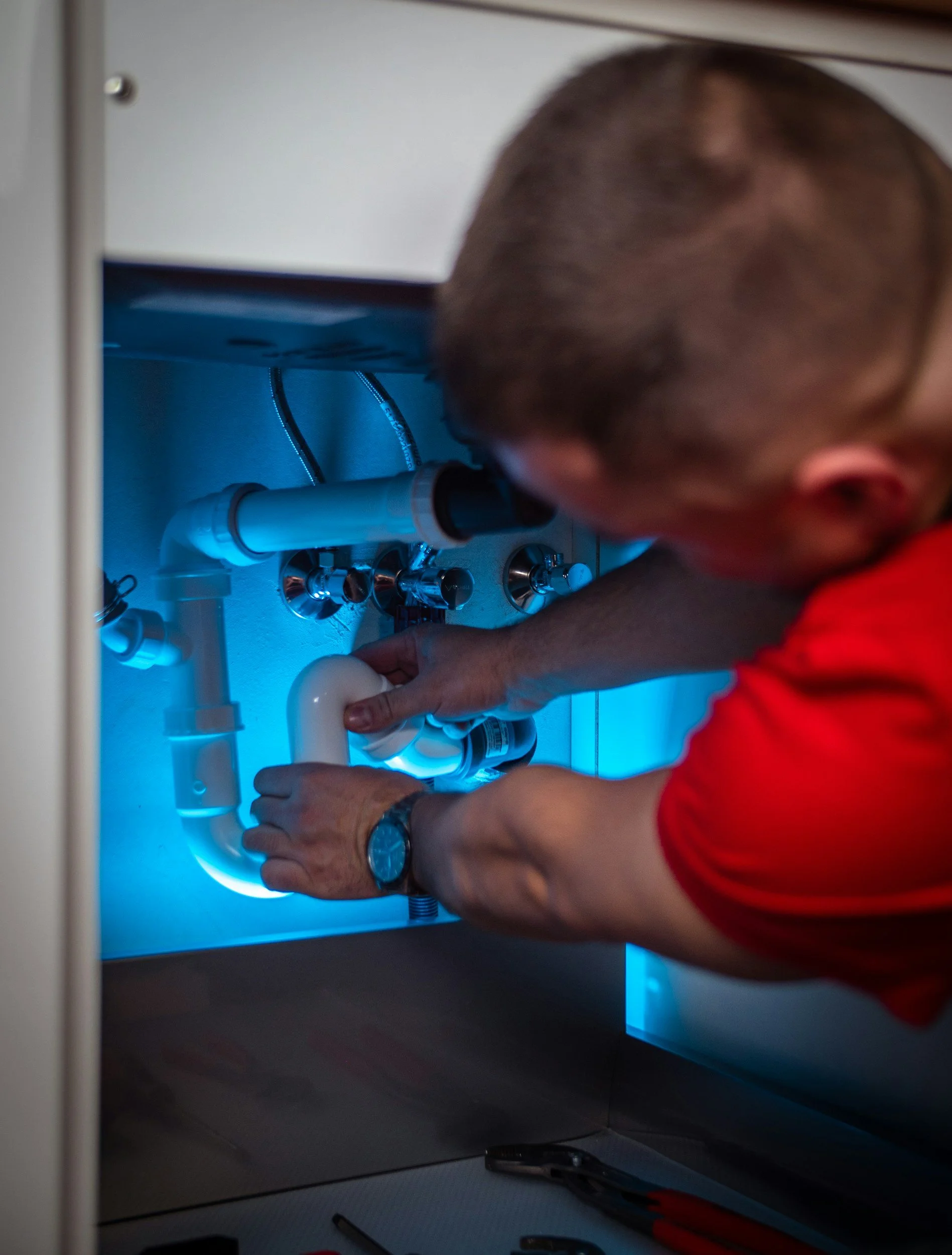
Beyond the visible: Essential behind-the-scenes improvements
A common mistake is focusing solely on visible elements. A successful refurbishment must also consider what lies behind the walls:
Accessible plumbing systems
Isolation points
Concealed pipework
Flush valves and cisterns
Urinal controls
Leak detection systems
Maintenance access points
Water monitoring capabilities
Good design simplifies future maintenance. A small leak detected and fixed promptly is far preferable to a hidden one that persists for months.
Key considerations for washroom refurbishments
With water efficiency becoming increasingly critical, ask these questions before starting your project:
What is the current water usage?
Establish a baseline if data is available.Are there any hidden leaks?
Inspect all components thoroughly.Are existing flush systems still appropriate?
Consider water consumption and maintenance ease.Are taps operating efficiently?
Evaluate flow rates and control mechanisms.Are urinals flushing unnecessarily?
Assess timed systems against actual occupancy.Can maintenance access be improved?
Easy access facilitates prompt repairs.What is the long-term value?
The cheapest option today may not be the most cost-effective over time.
Seizing the opportunity for commercial buildings
The current drought signifies a broader shift in water management, driven by government targets, increased focus on efficiency, and new regulations. For commercial property owners and facilities managers, water efficiency is a vital consideration for refurbishing existing facilities. A washroom refurbishment offers a chance to simultaneously improve aesthetics, accessibility, durability, hygiene, reduce maintenance, and cut unnecessary water consumption. The most effective refurbishments don't just update an old washroom; they enhance its performance for the future.
Is your washroom prepared for the UK's water-efficiency demands? With widespread drought, water efficiency is an immediate concern. If your commercial washroom relies on ageing fixtures, inefficient systems, or difficult-to-maintain plumbing, refurbishment presents an opportunity to address these issues as part of a comprehensive upgrade.
At Focus Washrooms, we specialise in full washroom refurbishments across London, the South East, East Anglia, and the Midlands. We assess your existing facilities and develop a tailored specification based on your building's actual usage. We believe the future of commercial washrooms lies in using water intelligently. Get in touch to discover how we can help your building achieve greater water efficiency.